
For factories that quote custom jobs, plan around machines and need to know what each run really cost. Odoo keeps the quote, the production plan, the stock and the accounts in one place.
AzkaTech set up Odoo for manufacturers like Debbas Group and Kitwood, and stays with your team after go-live.
Official Odoo Gold Partner. Implementing Odoo since 2015.






Who it’s for
Factories that build each order to the customer’s design, such as kitchens and furniture.
Plants that run repeat orders on printing and molding lines.
Workshops that cut and assemble structures for building projects.
Companies that supply materials or run industrial work on site.
The problem
Custom jobs are priced before anyone knows the real material and labor cost.
A missing component is noticed only when the line has already stopped.
The real cost of a production run shows up weeks after it shipped.
The factory floor and the accounts each keep their own numbers, and they rarely agree.
01 · Custom orders
In made-to-order work, every job is different. Sales needs a price today, but the real material and labor cost only becomes clear once the job is drawn up. So quotes go out on a guess and get revised again and again.
Odoo builds the quote out of the product’s options and its bill of materials, so the price starts with the real cost. The salesperson sees the margin before the quote is sent. Once the customer accepts, the same quote becomes the production order.
Kitwood, a Lebanese kitchen maker, runs all its showrooms on one Odoo set up by AzkaTech, with up-to-date price simulation for every quote.
Example. A custom job uses 120 kg of sheet material at $3 a kg and 16 hours on a work center that costs $25 an hour. The bill of materials prices it at $760 before margin, so sales quotes from a number instead of a guess.
Who it’s for
Sales teams and estimators.
Outcome
Quotes that match what the job will really cost.
02 · Materials and planning
A production line often stops for one missing component. The plan sits in a spreadsheet that does not know what is in the store, so purchasing hears about the gap when the shelf is already empty.
When an order is confirmed, Odoo checks its bill of materials against stock and shows what is missing. It then suggests what to buy and when, based on each supplier’s lead time. Planners see every order with its start date and whether its materials are ready.
Roto Flexo Press, a flexible packaging maker, had trouble with work orders and stock accuracy as its workload grew. AzkaTech customized Odoo for flexible printing and its production planning.
Example. An order for 500 units needs 1,000 fittings and stock shows 600. When the order is confirmed, Odoo suggests buying 400 with the supplier’s 10-day lead time, so purchasing orders today.
Who it’s for
Planners and purchasing teams.
Outcome
Shortages show up before the line stops.
03 · Shop floor and costs
In many factories, cost is worked out at month end using estimates. By then the order has shipped, and nobody can say which run lost money. Scrap and extra hours stay hidden.
In Odoo, operators follow each work order on a tablet and record their time and the quantities they produce. The cost of the run is built up out of the materials it used and the hours it took. Finance can compare it with the planned cost as soon as the run closes. Read how Odoo shows manufacturing cost.
Kamaplast, a Lebanese plastics manufacturer, moved off accounting software that could not handle production across its branches and warehouses. AzkaTech set up Odoo for plastic manufacturing.
Example. A run was planned at 8 hours on the line and took 11. Operators clock the real time on the work order, so the cost of the run includes the extra 3 hours the day it closes.
Who it’s for
Production managers and finance teams.
Outcome
You see the cost of each run when it closes.
04 · Quality and traceability
A defect found by the customer costs far more than one caught in the factory. When checks are done on paper, a failed one is easy to miss, and nobody can tell which other orders used the same material.
Odoo adds quality checks at the points you choose, such as when materials arrive or at a step in the work order. A failed check raises an alert for the quality team. Because each lot is tracked, you can find every order that used the same batch of material.
The Odoo project at Roto Flexo Press helped set the stage for the company’s ISO certification.
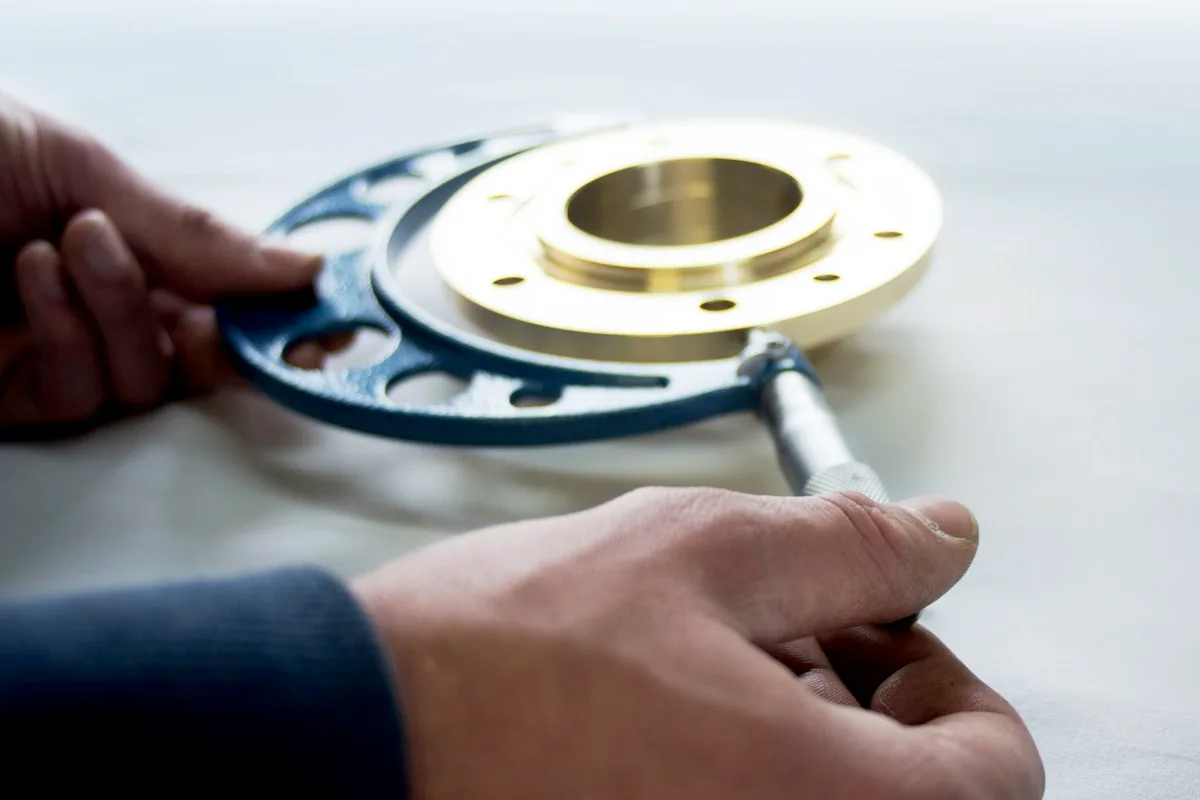
Example. A measure check asks the operator for a width of 50 mm, with 0.5 mm allowed either way. He enters 51, Odoo fails the check and opens a quality alert before the batch moves on.
Who it’s for
Quality managers and production supervisors.
Outcome
Defects are caught inside the factory, with a record of every check.
How it works
Each machine has planned checks in Odoo Maintenance. An operator can report a breakdown straight off the shop floor screen.
When part of a job goes to an outside workshop, Odoo sends the components and tracks what comes back.
A change to a product goes through approval before the new bill of materials reaches the factory.
Each plant has its own stock, and each company its own accounts. Head office still sees one set of reports.
AzkaTech also builds AI tools on top of Odoo. Read about AI for manufacturing.
Implementation
AzkaTech uses AI in every phase of the Odoo project, and it stays in use after go-live.
AI capability · Discovery
We walk through your sales, planning, production and accounts with the people who run them. AI turns those notes into a clear list of what Odoo needs to cover.
AI capability · Mapping
Your processes are mapped onto Odoo in a fit-gap analysis. AI matches your products and bills of materials to Odoo and flags what is missing.
AI capability · Configuration
We build the solution with standard Odoo first. AI drafts the setup notes and a short guide for each role on the floor.
AI capability · Testing
AI prepares test cases built on your real orders and production runs. Your team runs them in a pilot and signs off before launch.
AI capability · Governance
AI follows open issues and training progress for each plant, so risks show up before launch day.
AI capability · Post Go-Live
After launch, AzkaTech support stays with your team. You also get a knowledge base written around your own setup.
Client proof

Case study · Lighting and technology group since 1910
FAQ
The product needs two routes, Manufacture and Replenish on Order (MTO). In recent versions the MTO route is archived by default, so it has to be unarchived in Inventory before you can tick it on the product.
It adds the cost of the components on the bill of materials to the time spent on each work center, multiplied by that work center’s cost per hour. When operators clock real time, the real time is used.
Yes. The Shop Floor app shows each operator the work orders for his station, with instructions, a start and stop timer and any quality checks.
Yes. Turn on subcontracting and set the bill of materials as subcontracted. Odoo sends the components to the subcontractor and receives the finished goods back into stock.
Yes. Each work center has working hours and capacity, and work orders are scheduled around them. The planning view shows where a machine is overloaded.
Yes, for most custom work. Products can have variants and options, and a bill of materials can be adjusted per order. Very complex engineering, like full product configuration rules, may need customization, and we tell you that early.
Both run manufacturing and accounting. Odoo keeps CRM, quality, maintenance and the shop floor in the same system with no extra products to buy. If you already run SAP elsewhere in the group, that can tip the choice, and we’ll say so.
Odoo charges per user per month. Manufacturing, Quality and Maintenance are in the paid plans, and running several companies needs the Custom plan. See our Odoo pricing guide.