
Digitizing a Pioneer of Lebanese Sweets: Hallab 1881’s Journey to Integrated Excellence with Odoo

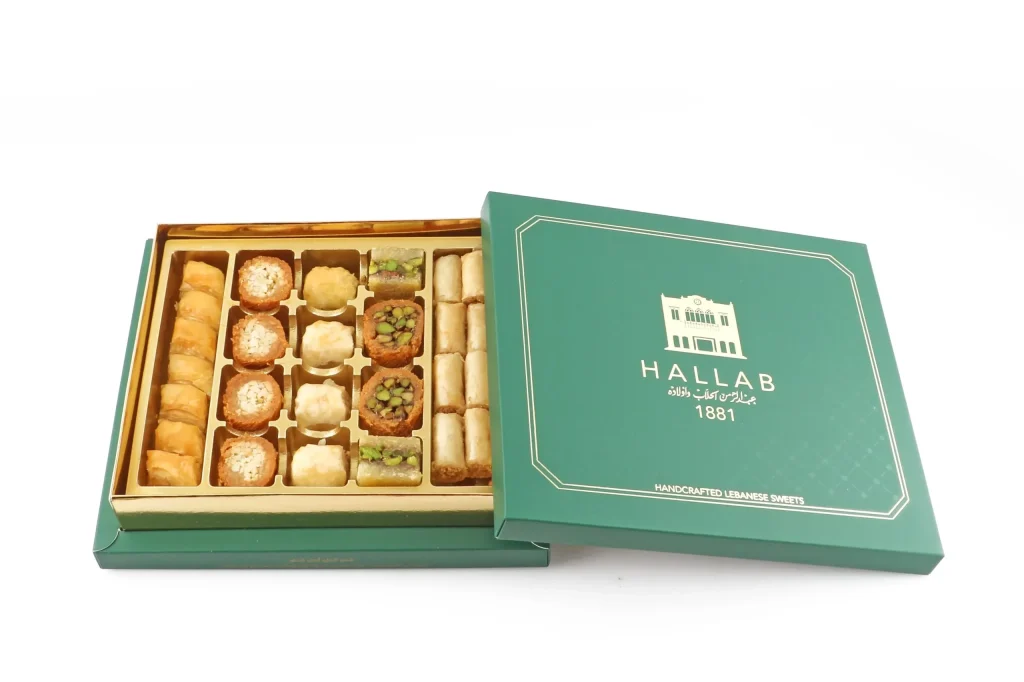
Founded in 1881 in Tripoli, Hallab 1881 is a leading Lebanese sweets manufacturer built on a legacy of craftsmanship, quality, and continuous innovation. Expanding from a traditional sweets producer into a regional brand, the company operates across multiple branches in Lebanon and the GCC, offering retail, catering, and international delivery services. With a multi-activity model combining manufacturing, retail, and catering across regional operations, Hallab manages complex workflows across production, inventory, sales, distribution, and finance. As the business grew, reliance on legacy systems like Visual Dolphin alongside manual processes created operational gaps and limited visibility. Today, Hallab 1881 is evolving into a fully integrated, data-driven enterprise optimizing production, inventory, and customer experience at scale.
Hallab
Food & Beverage
501–1,000
Transform your business like Hallab and sign up for a free demo today
Operations relied on Visual Dolphin and disconnected tools, creating data gaps and limiting coordination across production, branches, and sales channels
Managing BOMs, recipes, and raw material transformation lacked flexibility, limiting production planning, variant handling, and operational efficiency.
Stock across branches and production sites was not synchronized in real time, making it difficult to track availability, movements, and replenishment needs
Retail POS, catering orders, and distribution operated separately, limiting visibility on orders, pricing consistency, and alignment with inventory and production
Accounting was not fully connected to sales and operations, making it difficult to track revenues, costs, and ensure accurate reporting and localization compliance
Concerns around manufacturing fit, accounting accuracy requiring validation & test trials before committing to full ERP adoption
Tailored to Hallab 1881’s complex environment combining manufacturing, retail, and catering operations, Azkatech implemented a structured Odoo ERP approach to centralize operations, improve visibility, and connect all business functions within a single system.
Rather than limiting the implementation to a single function, the approach started with a strong focus on inventory and manufacturing (MRP) challenges, then evolved into a full ERP rollout across production, sales, accounting, and HR. This ensured operational alignment from production planning to sales execution and financial reporting. The implementation followed a validation-driven methodology, allowing Hallab to test the system through real scenarios before scaling.
Production, stock, and sales are fully connected, ensuring real-time coordination between manufacturing, inventory availability, and order fulfillment
Centralized inventory tracking provides accurate visibility on stock levels, movements, and replenishment across all branches and production sites.
Retail POS and catering operations are unified, enabling structured order management, pricing control, and alignment with production and inventory.
Real-time dashboards connect sales, production, and accounting, enabling accurate reporting, cost tracking, and faster decision-making
Manufacturing & MRP Optimization – Production processes were structured with BOMs, recipes, and planning tools, enabling better control over raw materials, production flows, and product variations.
Inventory & Multi-Location Stock Management – Inventory across branches and production sites was centralized, providing real-time visibility on stock levels, movements, and replenishment needs.
Unified Sales & Order Management (Retail & Catering) – Retail POS, catering orders, and sales operations were integrated into a single system, improving order tracking, pricing consistency, and coordination with inventory and production.
Integrated Financial Management (Localized Accounting) – Accounting was fully connected to operations, including POS and sales, enabling accurate financial tracking, reporting, and compliance with lebanon requirements.
HR, Payroll & Workforce Management – Employee data, attendance, leaves, and payroll were centralized, improving workforce coordination and operational efficiency across branches and production teams.
A structured, phased approach to ensure seamless adoption with zero downtime.
Analysis of operational gaps and inefficiencies across departments.
Configuration aligned with distribution and multi-company workflows.
Secure data migration ensuring accuracy and continuity.
System setup for automation and reporting pipelines.
Hands-on training for employees across roles.

In complex, multi-layered businesses like Hallab 1881 where manufacturing, inventory, retail, and catering must operate in perfect synchronization, the right system is essential not only for control but for maintaining quality, consistency, and scalability across operations. Azkatech approached Hallab’s transformation with a structured, validation-driven methodology, directly addressing concerns around manufacturing fit, accounting accuracy, and implementation risk. Rather than enforcing a rigid rollout, the approach started with inventory and MRP validation, then evolved into a full ERP implementation across all operational and financial functions, ensuring both confidence and long-term adoption.
By focusing on real operational complexity recipes, BOMs, multi-location inventory, POS integration, and financial alignment, combined with minimal customization and continuous stakeholder validation, Azkatech delivered a system tailored to the realities of a large-scale food production and distribution business. With a strong emphasis on integration, usability, and long-term support, including a structured multi-tier support model, Azkatech ensured that Hallab 1881 didn’t just implement an ERP system but built a reliable and evolving operational platform that supports efficiency, control, and future expansion.
Unified Operational Backbone Across Production & Distribution
End-to-End Visibility from Production to Sale
Faster, Data-Driven Operational Decisions
Standardized Workflows Across Manufacturing & Retail Operations
Aligned Retail, Catering & Fulfillment Operations
ERP Foundation Supporting Expansion & Omnichannel Growth