
Enhancing Multi-Store Operations for SODIS-MAD CI with Odoo
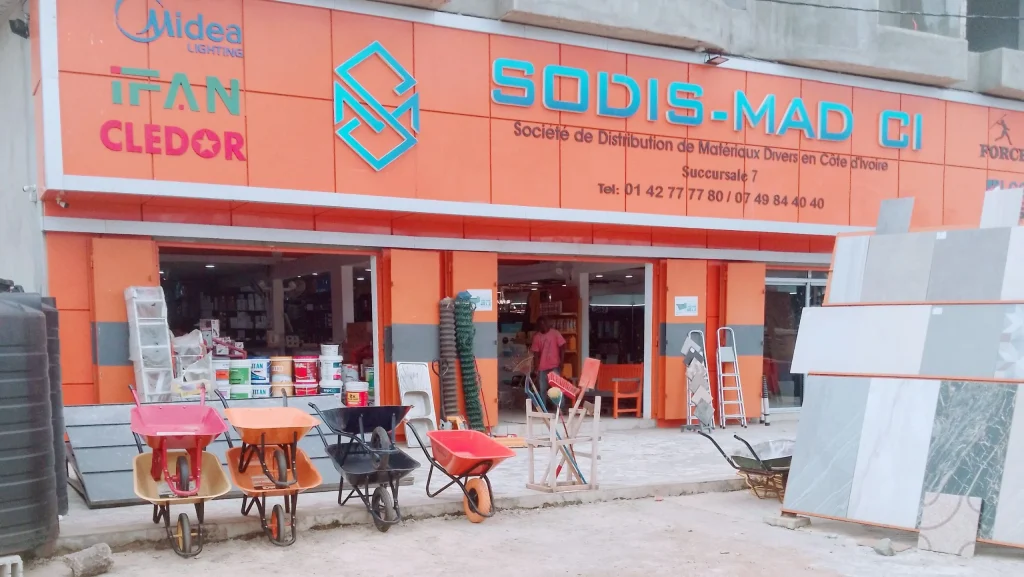
SODIS-MAD CI is a wholesale and retail distribution company operating in Côte d’Ivoire, managing a growing network of stores supported by centralized headquarters operations. The company handles high volumes of sales orders, warehouse transfers, and inventory movements, requiring continuous coordination across suppliers, warehouses, and retail branches. With a network of 14+ stores managing complex inventory flows and high transaction volumes, SODIS operates in a fast-paced and operationally demanding environment. As the business expanded, reliance on disconnected systems such as Sage and standalone POS solutions limited visibility and control. Today, SODIS is evolving into a fully integrated, data-driven retail organization with centralized operations and enhanced inventory control.
Sodis Mad-CI Group
Wholesale Distribution
Africa (Côte d’Ivoire)
Odoo POS Integration and Odoo ERP
Transform your business like Sodis-Mad CI and sign up for a free demo today
Operations were split between Sage at headquarters and separate POS systems across stores
With 14+ stores operating independently, there was no centralized view of stock levels, sales performance, or branch activity
Sales orders, warehouse operations, and invoicing were not fully aligned within a system-driven process, creating gaps between execution, stock validation, and financial recording.
Managing stock across multiple branches, along with hybrid procurement between headquarters and stores, made it difficult to track availability, control distribution, and ensure efficient replenishment
Heavy reliance on manual data entry, including bulk Excel imports for purchases
Limits the ability to optimize purchasing decisions, monitor performance, and manage intercompany operations effectively
Tailored to SODIS-MAD CI’s multi-store retail operations and high dependency on inventory movement, Azkatech implemented a phased Odoo approach to connect, structure, and centralize operations without disrupting existing systems.
Rather than replacing systems immediately, the approach started with POS and system integration, enabling synchronization between Sage and store-level operations. This allowed SODIS to unify sales, clients, and product data across branches while maintaining business continuity.
Seamless synchronization between stores and headquarters enables unified sales tracking, product management, and real-time operational visibility.
Aligned processes ensure smooth coordination between order creation, stock validation, and invoicing, reducing operational gaps and inconsistencies.
Real-time tracking of stock across warehouses and branches improves availability control, distribution planning, and operational accuracy.
Dashboards provide insights into sales performance, stock levels, and product movement, enabling data-driven decision-making across stores.
POS & System Integration – Odoo POS was integrated with Sage, enabling synchronization of products, costs, sales transactions, and clients between stores and headquarters, ensuring data consistency across systems
Multi-Store Operations & Retail Visibility – Store-level operations were structured with centralized visibility into sales, stock movement, and branch performance across all locations
Sales, Inventory & Workflow Alignment – Core workflows were structured to align sales orders, warehouse operations, and invoicing, ensuring better coordination between commercial and operational processes.
Inventory Tracking & Movement Control – Stock movements between warehouses and branches were tracked in real time, improving accuracy and reducing inconsistencies caused by manual processes
Data Centralization & Reporting – Disconnected data sources were unified into centralized dashboards, enabling visibility on inventory, sales performance, and product movement across stores.
SODIS transitioned from a hybrid setup combining Sage and POS to a fully unified Odoo Enterprise ERP, centralizing all core operations within a single platform.
Advanced accounting capabilities were introduced, including aged receivables and payables, customer and supplier SOA, cost centers per branch, and multi-currency management, enabling structured financial control and reporting.
Inventory across warehouses and stores was centralized with real-time tracking, while procurement workflows supported both HQ purchasing and direct store sourcing, including landed costs and product costing.
Historical tracking of item movement and sales enabled demand forecasting, seasonal analysis, and smarter purchasing decisions, all within a unified sales, inventory, and financial ecosystem.
A structured, phased approach to ensure seamless adoption with zero downtime.
Analysis of operational gaps and inefficiencies across departments.
Configuration aligned with distribution and multi-company workflows.
Secure data migration ensuring accuracy and continuity.
System setup for automation and reporting pipelines.
Hands-on training for employees across roles.

In distribution-driven businesses like SODIS, where operations depend on accurate inventory movement, multi-store coordination, and financial control, implementing the right system is critical to ensure efficiency and scalability.
Azkatech delivered a phased, business-aligned approach tailored to SODIS’s operational reality starting with system integration to connect POS and headquarters, ensuring data consistency and real-time visibility without disrupting ongoing operations. As SODIS validated early improvements in visibility, reporting, and workflow control, Azkatech extended this foundation into a full ERP transformation, replacing Sage with Odoo Enterprise and centralizing all core functions within a single system.
This evolution enabled:
Structured financial governance with branch-level control
Centralized inventory and multi-warehouse management
Automated intercompany and procurement workflows
Accurate product costing including landed costs
Advanced reporting and data-driven decision-making
By combining fast implementation, minimal disruption, and scalable system design, Azkatech supported SODIS in transitioning from fragmented operations to a fully integrated, data-driven distribution environment.
→ From system integration → to full ERP control
→ From operational complexity → to structured, scalable growth
Connected Multi-Store Operations
Full Visibility Across Stores & Inventory
Structured Sales, Inventory & Financial Workflows
Reduced Manual Processes & Improved Data Accuracy
Inventory Intelligence & Data-Driven Decision Making
Scalable Foundation for Full ERP Transformation